
What Is Sensory Bodywork?
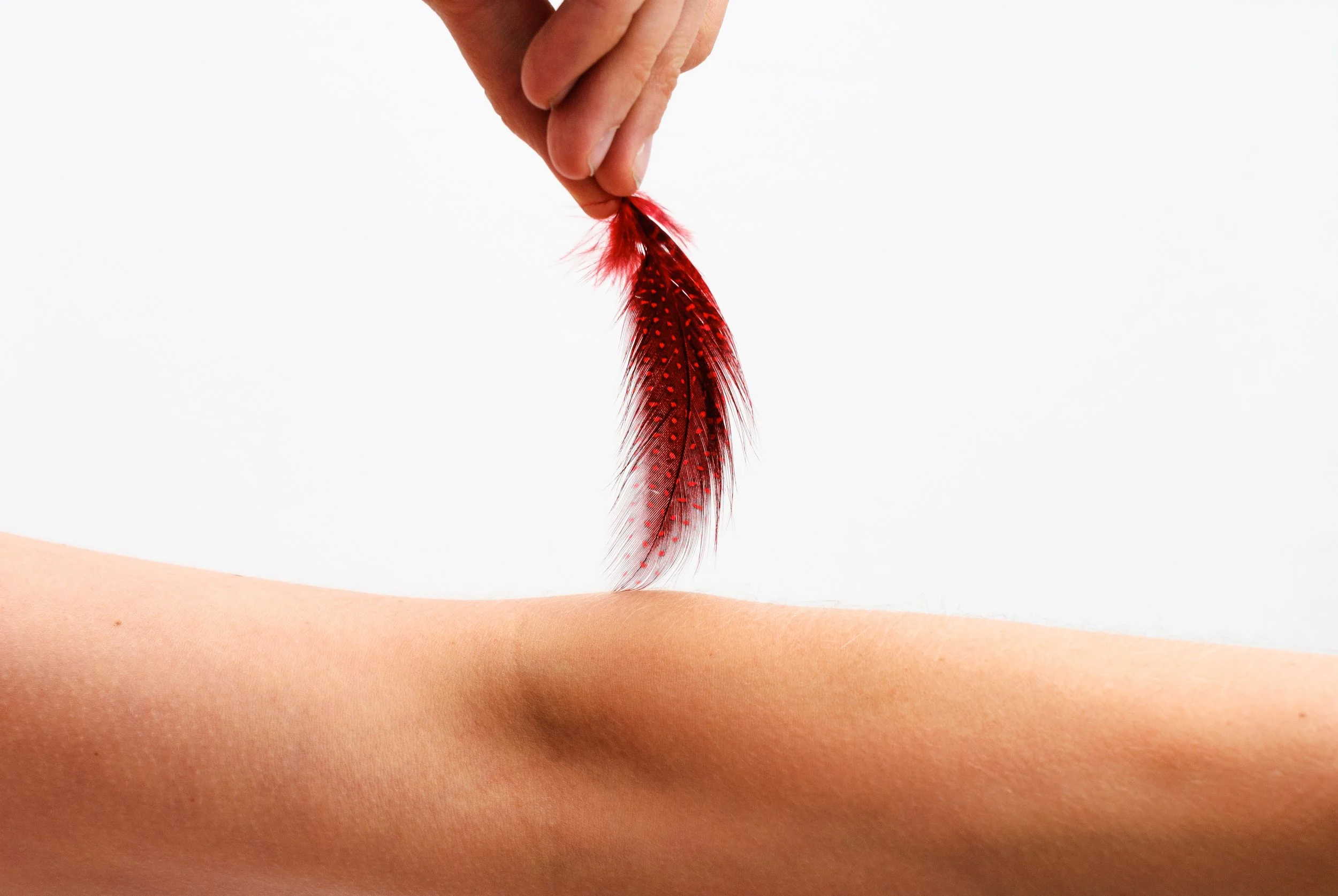
A few years ago, if someone had asked me what sensory bodywork was, I probably would have given them an answer that sounded lovely and slightly mysterious.
I would have said something about presence, breath, touch, embodiment, the nervous system, and the quiet intelligence of the body. All true. Also, perhaps, the kind of answer that makes people nod thoughtfully while still wondering, Yes, but what actually happens?
So let me say it more plainly.
Sensory bodywork is intentional, consent-based touch that helps you reconnect with your body through sensation, pleasure, presence, and awareness.
It is also the language I often use for what many people might call sensual bodywork, erotic bodywork, or intimate bodywork. Not because I am trying to disguise what it is. Quite the opposite. I like the word sensory because it brings us back to where the work actually begins: the senses.
The warmth of skin. The rhythm of breath. The weight of a hand resting with care. The feeling of being attended to without being rushed, judged, or expected to perform.
That may sound simple, but for many men, it is not simple at all.
“Sensory bodywork” says something real. It names the mechanism: we work with the body through sensation.
It is not just massage with a more suggestive name
Sensory bodywork is not simply a regular massage with a wink attached to it.
It is not vague, transactional touch dressed up in softer language. It is not an invitation to override boundaries or turn every physical sensation into a sexual event. At its best, sensory bodywork is clear, intentional, grounded, and deeply respectful.
It may include massage, breathwork, sensual touch, guided awareness, grounding, and nervous system regulation. Depending on the practitioner, the agreement, and the person receiving the work, it may also include erotic energy, arousal, or pleasure as part of the experience.
But the point is not to perform eroticism.
The point is to become more available to your own body.
That distinction matters. A lot of men know how to perform desire. They know how to look confident, say the right things, make the right moves, and appear sexually comfortable. Far fewer men have had the chance to slow down and ask, What am I actually feeling? Do I want this? Am I enjoying this? Am I here, or am I just doing what I think I’m supposed to do?
Sensory bodywork creates space for those questions, not as an interrogation, but as an experience.
Why men seek sensory bodywork
Most men do not come to this work because they have a perfectly polished explanation.
They come because something in them is hungry.
Sometimes that hunger is sexual. Sometimes it is not. Often, it is more tender and harder to name. A longing to be touched without having to initiate. A desire to feel wanted without having to perform. A need to be held, attended to, or met in a way that feels human rather than hurried.
Some men arrive because they feel disconnected from their bodies. Men who've spent years in their heads and very little time in their skin. Men who were never taught that pleasure was something they were allowed to experience with full attention and zero shame. Men who are curious about touch, about intimacy, about what it might feel like to be fully met in their physical experience without judgment.
It is also for men who've done a lot of personal work and are ready to go somewhere they haven't been able to reach through talking alone. Because some things don't live in language. They live in the body, and the only way to reach them is to go there directly.
Some have spent years managing stress, work, family, dating, sex, and everyone else’s expectations with a kind of quiet competence that looks impressive from the outside and feels exhausting on the inside.
Others come because sex has become complicated. They may be having it, but not really feeling it. They may crave intimacy, but find themselves avoiding it. They may be confident in fantasy and guarded in real life. Or they may simply know that something about touch, pleasure, and connection has started to feel more like pressure than nourishment.
It may be for you if touch feels complicated. If you crave closeness but tense up when it arrives. If you have spent years performing confidence while privately wondering why pleasure feels so far away. If you want to explore sensuality or erotic energy in a setting that is clear, respectful, and unrushed.
You do not need to be broken to benefit from this work.
You may simply be ready for a more honest relationship with your body.
I have met many men who have had plenty of sex, but very little true contact.
Plenty of stimulation, but not much presence.
And the body knows the difference.
Sensory bodywork offers a slower experience. It invites the body to stop being a project, a performance, or a problem to solve. For an hour or two, the body becomes a place worth listening to.
Why I use the word “sensory”
The words sensual and erotic can be charged.
For some people, they are exciting. For others, they immediately bring up shame, suspicion, embarrassment, religious residue, old experiences, cultural conditioning, or a vague sense that something must be wrong if pleasure is being discussed too openly.
That is one reason I find the word sensory useful. It gives us room to breathe.
It is exactly what it says it is: work with the body, through sensation, in service of your wholeness. The erotic dimension is included because the erotic is part of wholeness, not separate from it.
It allows us to speak about pleasure without reducing the work to sex. It reminds us that sensuality is not a fringe activity reserved for certain kinds of people in certain kinds of lighting. Sensuality is your capacity to feel.
Warm water on your back is sensual. A good meal is sensual. The right song at the right moment can be sensual. So can the feeling of safe, unrushed touch from someone who is paying attention.
Eroticism, in the deeper sense, is not limited to sexual activity either. It is aliveness. It is the current that moves through desire, creativity, longing, grief, pleasure, risk, tenderness, and the parts of us that still want to feel awake in our own lives.
Sensory bodywork gives that aliveness a place to be explored without forcing it to become anything in particular.
What happens in a session?
Every session begins with the person who walks into the room.
That may sound obvious, but it is important. There is no universal script because no two bodies arrive the same way. You might come in feeling curious, nervous, excited, numb, self-conscious, tender, or not entirely sure what you feel. The body rarely arrives with a tidy little agenda.
A sensory bodywork session usually begins with conversation. We talk about what brings you in, what you are hoping for, what your boundaries are, and what kind of touch feels supportive or interesting. We also talk about what is not on the table.
This is not a cold administrative step before the “real” work begins. It is part of the work.
Clear consent helps the body relax.
Ambiguity may be thrilling in fantasy, but in an actual embodied session, clarity is what allows someone to soften. The nervous system needs to know that it has choices. It needs to know that a pause will be respected, that a no will not be punished, and that desire does not have to be rushed into performance.
From there, the session might include grounding, breath, massage, sensual touch, guided awareness, or simply slowing down enough for your body to notice what it actually wants. Sometimes the work is quiet and nurturing. Sometimes it is more sensual. Sometimes it brings up emotion. Sometimes it brings up laughter, because bodies are honest and occasionally ridiculous. I say that with great affection.
Some of the most meaningful moments can look small from the outside.
A man realizes he can ask for slower pressure. He notices that he has been holding his breath. He discovers that what he thought he wanted was intensity, but what his body actually needed was gentleness. He says, “Not there,” and feels the relief of being respected.
These are not small things.
For men who have spent years overriding themselves, they can be a doorway.
Some things don’t live in language. They live in the body, and the only way to reach them is to go there directly.
Sensory bodywork and erotic bodywork
In my language, sensory bodywork and erotic bodywork are closely related.
I often use sensory bodywork as a softer, more spacious synonym for sensual or erotic bodywork. The difference is mostly in emphasis. Erotic bodywork may sound like the focus is arousal, desire, or sexual energy. Sensory bodywork begins with sensation and awareness, then allows pleasure or erotic energy to emerge if that is part of the agreed-upon container.
This matters because many people hear the word erotic and immediately jump to assumptions.
They imagine the work must be explicit, goal-oriented, or focused on a particular outcome. But that is not how I understand it. Erotic energy is not something to be grabbed at or manufactured. It is something we relate to. Sometimes it is present as warmth, curiosity, or subtle charge. Sometimes it is not present at all, and the session is still deeply valuable.
In this way, sensory bodywork lets us keep the erotic in the room without making it the boss of the room.
Pleasure is welcome. Arousal is not a problem. Curiosity has a place. But the deeper invitation is to remain connected to yourself while sensation unfolds.
That is where the work becomes powerful.
It is not about fixing you
I do not think of sensory bodywork as something for broken men.
That framing feels far too small, and frankly, a bit rude.
This work is for men who want a more honest relationship with their bodies, their pleasure, and their capacity for intimacy. You do not need to be in crisis to want that. You do not need to have a dramatic wound or a perfectly articulated “issue.” You may simply know that you want to feel more connected.
You may want to explore sensuality without shame. You may want to receive touch in a setting that is clear, respectful, and unrushed. You may want to learn what your body actually enjoys, rather than what it has been trained to tolerate.
So many men have learned to treat pleasure as something they have to earn. Earn by being attractive enough, young enough, confident enough, masculine enough, successful enough, or sexually impressive enough.
Sensory bodywork offers a different premise.
Your body does not have to audition for care.
Why this work matters
We live in a culture that gives men very few places to be tender.
Men are often encouraged to pursue sex, but not always taught how to receive touch. Many are told to be confident, but not shown how to feel safe in their own skin. They are praised for being controlled, stoic, sexually capable, or emotionally contained, then quietly wonder why intimacy feels so difficult.
The body keeps track of all of this.
It stores shame, hunger, rejection, longing, grief, pressure, and the tiny compromises we make when we decide it is easier to disconnect than to feel what is really happening.
Sensory bodywork offers a place to listen.
Not to analyze everything to death. Not to turn the body into another self-improvement assignment. Just to listen.
Sometimes the body speaks through tension. Sometimes through numbness. Sometimes through tears that seem to come from nowhere, except of course they do not come from nowhere. Sometimes it speaks through pleasure, which can be its own kind of truth.
And sometimes the body says something very simple:
I am tired of being ignored.
Coming back to your senses
So, what is sensory bodywork?
It is a way of returning to the body through intentional, consent-based touch.
It is a synonym for sensual or erotic bodywork, yes, but it places the emphasis on sensation, awareness, nervous system safety, pleasure, and embodied presence.
For the man who has been living in his head, it can be a way back down into the body.
For the man who has confused being desired with being connected, it can offer a different experience of intimacy.
For the man who is tired of performing ease while quietly longing to be held, it can be a relief.
Sensory bodywork is not about becoming someone else.
It is about slowing down enough to feel what has been there all along.
Your breath. Your boundaries. Your longing. Your pleasure.
Your body, waiting patiently for you to come back.
If you've been curious about this kind of work, if you've been drawn to it but weren't quite sure what to call it or whether it was "allowed," I want you to know: your curiosity is welcome here. The door is open. You don't have to have it all figured out before you walk through it.