
What men in Los Angeles are actually looking for when they book a massage
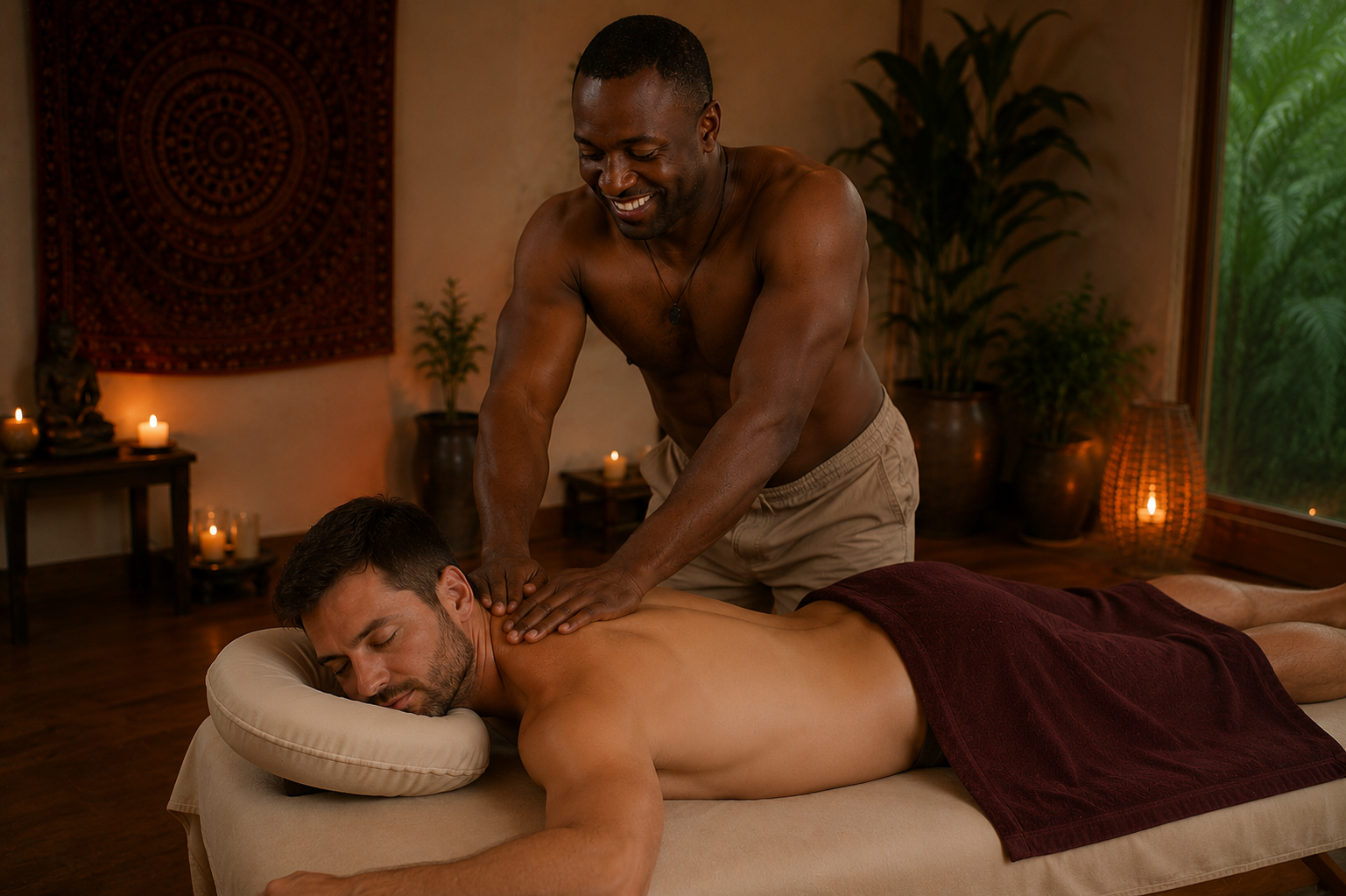
I've been working with men in Los Angeles for eight years. I have a table, a room, and a standing policy of not pretending I don't notice things.
What I've noticed is this: most men who walk through my door aren't here for the reason they think they are.
They say lower back. They say stress from work. They say they've been carrying tension in their shoulders since the pandemic and they just need someone to work it out. All of that is true. And none of it is the whole story.
Los Angeles does something particular to men. It's a city that runs on performance, on how things look, on the gap between who you're presenting and who you actually are at 11pm when the room is quiet. It's a city where you can be surrounded by people and functionally alone. Where the gym is a social event but nobody touches you. Where intimacy gets outsourced to apps and the physical presence of another human being becomes a thing you schedule, if you schedule it at all.
So they book a massage.
The knot that isn't a knot
There's a thing that happens in sessions, usually about fifteen minutes in, when the nervous system decides it's safe. The breath changes. The shoulders drop a half inch they were never going to release on their own. Sometimes there's a sound. Sometimes there are tears, quiet ones, the kind a man hopes I don't notice. I always notice. I don't always say anything.
What I'm feeling in the tissue isn't just tightness from sitting at a desk. It's held breath. It's years of not being touched without an agenda. It's the particular armoring of a man who has learned that his body is either a tool or a problem, and hasn't been offered a third option.
That's what they're looking for. Not always consciously. But the body knows.
What Los Angeles men are carrying
The entertainment industry runs on exposure and rejection in equal measure. The tech sector runs on output. The wellness world, which is everywhere in this city, can paradoxically make men feel worse about themselves, more optimized, less human. And then there's the particular loneliness of a city where everyone is in motion, where you can spend three years here and still not know your neighbors.
Men come in carrying all of this. They don't name it that way. They name it a tight neck, a bad hip, trouble sleeping. But the body is a very honest narrator. It stores what the mind won't file.
I've had men tell me, after a session, that they hadn't been touched by another person in months. Sometimes longer. Said it almost offhandedly, like it was a minor logistical detail. It never is.
What they're not looking for
They're not looking to be fixed. Men who come to a bodyworker in this city have usually already tried fixing: the chiropractor, the trainer, the productivity stack, the cold plunge. What they're looking for, even if they can't say it, is presence. Another person who is actually paying attention to them. Not to their output or their performance or their potential. Just to them, in a body, in a room, for an hour.
That's a quieter thing than most wellness marketing suggests. It doesn't photograph well. But it's what makes men come back.
The city as context
Hollywood, where I work, sits at a particular intersection of aspiration and exhaustion. The men who find me are often at some version of a threshold: something isn't working, they're not sure what, they're willing to try something they can tell themselves is practical, like bodywork. The massage is the door. What's on the other side of it varies by the person.
Some of them leave with a looser neck and a better week ahead. Some of them leave with a question they didn't know they had. Some of them come back, and eventually we find ourselves talking, or they find their way toward something deeper, a different kind of session, a conversation about what they actually want their life to feel like in their body.
I don't push any of that. The table has its own intelligence. It tends to surface what's ready to be surfaced.
What I can tell you is that when a man books a massage in Los Angeles, he is almost always looking for more than a massage. Whether he knows it or not is a different question. Whether he finds it depends partly on the practitioner, and partly on how willing he is to let himself be met.
Most men are more willing than they let on. The table has a way of making that clear.
A few questions men ask before they book
I've never had a massage from a male therapist. Is that going to be strange?
For a lot of men, the first session carries some awkwardness, and that's completely normal. Most of it dissolves within the first ten minutes. Male bodyworkers often bring a different quality of presence and physical understanding to the work, and many men find they actually prefer it once they've tried it.
What if I get emotional on the table?
It happens more often than men expect, and far less dramatically than they fear. The body releases what it's been holding when it finally feels safe enough to do so. You don't need to explain it or manage it. That's what the room is for.
How is this different from a spa massage?
A spa massage is primarily about relaxation and muscle relief, which is valuable on its own. The work I do goes a little deeper, with more attention to what the body is holding beneath the surface tension. Sessions tend to be quieter, slower, and more intentional.
I'm not gay. Can I still book?
Yes. The practice is open to gay, straight, bisexual, and curious men. What matters is that you're looking for skilled, intentional bodywork in a space where you can actually relax. That's not a sexuality question.